Fashion & Accessories · The journal
Find Your Style: Choosing Your First Statement Accessory
Find a statement accessory that fits your style and wardrobe. Compare materials, sizing, construction, care, and returns before making your first purchase.
In this guide
Take your time.
Make it your own.
Style for adults · A practical first-purchase guide
A sculptural cuff against a rolled shirt sleeve. A wide belt over a simple dress. A small hardware detail that makes a familiar outfit feel different. One well-chosen accessory can introduce a new look without requiring a new wardrobe.
If you are curious about BDSM-inspired fashion, start with the design elements you enjoy: straps, buckles, clean lines, or contrasting textures. You do not have to adopt a label or communicate a particular identity. Your clothing is a personal choice, not a statement of consent or an invitation to make assumptions about you.
The best starting point is a piece you can imagine wearing comfortably with clothes you already own. This guide helps you compare style, fit, materials, construction, and upkeep before spending money.
Define the look you want
Before browsing, choose two or three words for the effect you want: understated, structured, playful, graphic, polished, or dramatic. These words can help you filter out attractive pieces that do not suit your actual wardrobe.
- Subtle hardware: a small buckle, ring detail, or narrow strap that adds interest without becoming the outfit’s focal point.
- Minimalist design: a simple cuff or streamlined band, where proportion and finish do most of the work.
- A bold statement: a wide belt, prominent hardware, or a strong silhouette. Try keeping the rest of the outfit simple while you decide what feels right.
- Layered styling: several complementary details. Begin with one piece and build gradually instead of buying a coordinated collection immediately.
A useful question is: “Would I still want this if the product photo showed it with my everyday clothes?” If the answer is uncertain, pause and try planning an outfit first.
Four accessible starting points
A cuff bracelet
A bracelet lets you experiment on a small scale. Compare its width, fastening, weight, and how it sits when you bend your wrist. Think about ordinary tasks: typing, putting on a jacket, or carrying a bag. A cuff that looks striking in a photograph may feel awkward under a fitted sleeve.
A statement belt
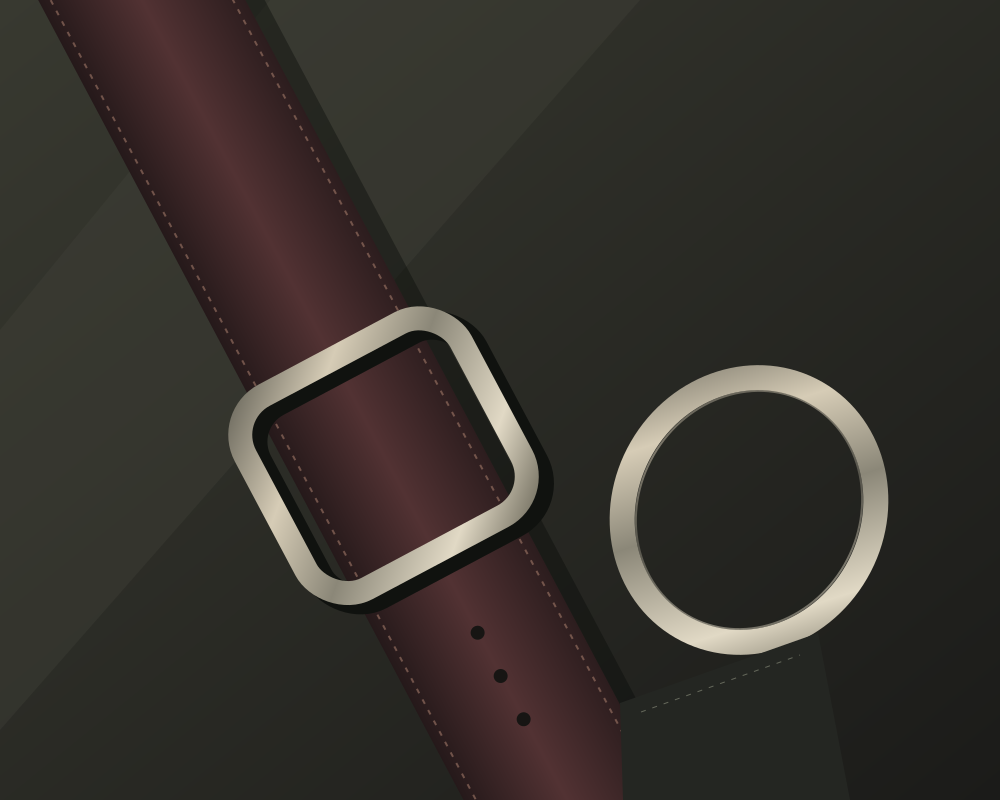
A belt can change the proportions of an outfit as well as add detail. Decide whether you will wear it through belt loops, at the waist over a garment, or lower on the hips. Those positions can require different measurements. Check the usable fastening range, not just the total strap length.
A fashion choker
A narrow band and a wide structured design create different effects. Look for clear sizing and a fastening you can operate yourself. Choose a comfortable fit that does not press on your throat or interfere with normal movement, breathing, or swallowing. A decorative ring is not an attachment point for pulling or restraint.
A harness-inspired garment
These fashion pieces can add lines and structure over a shirt, dress, or knitwear. Before buying, look for front and back photographs, a sizing diagram, and an explanation of which straps adjust. Check how the design will sit over the layers you intend to wear. More adjustment points are useful only if you understand how to use them.
Compare materials without relying on labels alone
Material names are a starting point, not a complete description of quality, comfort, or lifespan. Lining, thickness, coatings, construction, and how you use an item all matter. Neither a higher price nor the phrase “genuine leather” tells you everything you need to know.
| Material | What to compare | Care to verify | Question for the seller |
|---|---|---|---|
| Leather | Thickness, flexibility, finish, lining, and edge treatment. | The instructions for that leather and finish; whether any conditioner is recommended. | “What leather and finish are used, and what touches the skin?” |
| Coated fabric, including PU-coated materials | Backing fabric, coating, flexibility, seams, and edges. | Approved cleaning method and any heat, moisture, or storage restrictions. | “What are the coating and backing made from, and how should this item be stored?” |
| Textiles and elastic | Fiber composition, stretch, lining, and whether the design holds its shape as intended. | Whether washing is permitted and how attached hardware affects care. | “What is the adjustment range, and what does the care label specify?” |
| Metal hardware | Weight, base metal, plating, surface finish, and edges. | Instructions for both the hardware and surrounding material. | “What metal and coating are used in the parts that contact skin?” |
Do not assume all leather needs conditioning on a fixed schedule, that all textiles are washable, or that one material always outlasts another. For an example of why finish matters, Coach’s leather-care guidance emphasizes differences between leathers and following product instructions. Its advice is specific to the products discussed, not a care recipe for every accessory.
If you consider silicone, latex, or another specialty material, ask for its composition and product-specific care instructions too. Labels such as “body-safe,” “medical-grade,” “hypoallergenic,” or “vegan” do not answer every question about suitability, construction, or maintenance. Ask what a claim means and what supports it. If you know you react to a particular material, do not rely on a broad marketing label to rule it out.
Get the fit right before choosing a size
Use the seller’s measurement guide and a flexible tape measure. Find out whether a listed dimension describes your body measurement, the item’s inside circumference, or its full length. These are not interchangeable.
Measure where you actually plan to wear the item. If it will sit over clothing, account for those layers according to the brand’s instructions. Do not assume that your usual clothing size translates to an accessory size, or that “one size” means it will fit you.
Look for room to adjust comfortably rather than choosing something that only just fastens at its limit. If you fall between sizes, ask the seller before ordering. Avoid planning to punch extra holes or modify a new item unless the maker confirms that the alteration is appropriate and explains any effect on returns or warranty coverage.
Inspect the details that affect everyday wear
Edges and surfaces: Look for close-up photographs. Edges, seams, and hardware should suit the intended contact with skin or clothing. An unfinished-looking edge is not automatically proof of poor workmanship, but roughness or sharp projections deserve questions.
Stitching and joins: Inspect for loose threads, uneven joins, or lifting layers. Ask about repair options if the piece has replaceable parts. Neat stitching is useful evidence to consider, not a guarantee of durability.
Fastenings: Can you put the piece on and remove it yourself? Do not assume that a snap, buckle, or advertised quick-release mechanism will be easy for you to operate. Consider dexterity, visibility, and whether you will be wearing gloves or layers.
Weight and movement: Think about sitting, reaching, and wearing the accessory under a coat. Start with a brief try-on, follow the seller’s return conditions, and remove an item that causes discomfort. You do not need to tolerate an unsuitable fit to achieve a look.
Three outfits to try with clothes you already own
Clean lines: a cuff, shirt, and trousers
Pair a simple cuff with a button-down shirt and plain trousers. Roll the sleeve enough to show the detail and keep other jewelry minimal. Whether this suits your workplace depends on its dress code and your preferences; no accessory is universally office-appropriate.
A defined silhouette: a belt over a simple dress
Try a statement belt over an otherwise uncomplicated dress or long shirt. Let the buckle or strap shape be the focal point. Compare how the outfit feels sitting down as well as standing in front of a mirror.
Graphic layering: a fashion harness over a T-shirt
Wear a harness-inspired garment over a plain T-shirt with jeans or relaxed trousers. Choose a contrast that makes its shape readable, and check the back as well as the front. Keep the first version simple before adding more accessories.
Before you buy: a practical checklist
- Purpose: Is the item described as fashion, and does its stated use match your plans?
- Wardrobe: Can you build at least two outfits around it using clothes you own?
- Measurements: Are the sizing method and usable adjustment range clear?
- Materials: Do you know what the main material, lining, and hardware are made from?
- Construction: Can you see the edges, joins, and fastening in enough detail?
- Care: Are the instructions available, and will you realistically follow them?
- Total cost: Have you included shipping, applicable charges, and any recommended care supplies?
- Delivery: Does the stated timeframe suit your plans without relying on a last-minute arrival?
- Returns: Have you checked the current policy, including exclusions for custom items and any return costs?
Keep fashion within its stated purpose
Straps, rings, and buckles can be decorative. Their appearance does not demonstrate suitability for restraint, pulling, suspension, or supporting weight. Use an accessory only for the purpose specified by its manufacturer. Even a product marketed for another use should not be assumed risk-free or independently tested without evidence.
Personal style also does not communicate consent. For a separate introduction to discussing expectations and boundaries, read Before You Begin: Consent, Boundaries & Communication.
Make a decision you can explain
Choose your look, set a total budget, and compare two options using the same questions. Write one sentence for each: “I would wear this with ___, it fits because ___, and I can maintain it by following ___.” Missing answers show you what to ask before buying.
You may choose the simpler item, wait for clearer information, or buy neither. Your first statement accessory does not need to be your boldest purchase. It needs to feel like something you want to wear.
Editorial note: This is a general selection guide, not a hands-on product review. No specific products have been tested or ranked here. Confirm materials, sizing, care, and current terms with the seller.

